



Kipinävuoro: Denise Wall
Kipinävuoro is a writing by a member of the MarkkinointiKollektiivi community about their observations in the field of marketing.
Finnish marketers are under pressure, with as many as seven in ten professionals having toyed with the idea of switching jobs in the past year. Not only that, a new survey by industry association MarkkinointiKollektiivi has revealed that nearly half have considered leaving the industry altogether.
MarkkinointiKollektiivi’s latest survey of wellbeing among marketing and communications professionals in Finland appears to confirm our anecdotal observations of the situation on the ground for our in-house marcomms colleagues. From one-person teams grappling with competing priorities to corporate restructuring stripping resources and reduced or frozen budgets, the report provides a clear quantitative and qualitative picture of how marketers are coping in the current distressed environment.
The results of the “Markkinointialan suuri hyvinvointikysely” show that up to 70% of nearly 800 respondents polled said they’d considered finding new positions over the previous 12 months, while 49% said they’d contemplated leaving the industry altogether. Driving those numbers is what appears to be a mismatch between expectation and reality in the workplace.
The marketing powerhouse myth
Who can forget recruitment ads asking for marketing “swiss army knives” to step forward? The expectation was that employers could optimise for efficiency by hiring professionals capable of delivering a broad range of expertise, including brand building, sales support, demand and lead generation, to name just a few.
However, as the operating environment continues to evolve, marcomms professionals are having to onboard new capabilities — sustainability & ESG comms, GEO, growth marketing — to meet emerging corporate demand. And all that with reduced support for retraining and upskilling.
This myth of the all-knowing, all-powerful marketing powerhouse — someone who can spread themselves across multiple projects and organisational demands — has been decisively exploded by the study. While 81% of survey participants said they’d experienced satisfaction and enthusiasm at work during the previous year, a striking 72% reported experiencing burnout or exhaustion in the year prior to the survey.
At the same time, 80% pointed to a sense of feeling rushed and having to put out fires, while a majority also pointed to fragmented work (78%), excessive work (67%), splintered information sources (64%), unclear roles and responsibilities (64%), internal communication challenges (63%) and loneliness in their roles (57%). These experiences are occurring in a landscape where organisations continue to slash budgets while expecting faster results – creating a fractured workday and a high-friction environment for marketers.
An underlying sense of discontent also emerged from the fact that more than 60% of professionals felt that top management did not fully grasp the strategic nature of their roles, nor the reality of their daily work. This was compounded by the reflection that marketing is still frequently considered a disposable cost centre, rather than an engine for business growth. As a result, marketing and communications have traditionally been the first functions on the chopping block during corporate restructuring exercises.
AI seen as an enabler
Although women dominate marketing in the survey (85%), fully half of them (50%) felt that gender was a determining factor in career progression, while one-third complained of patronising behaviour in professional settings. To further rub salt into the wound, some respondents raised anecdotal experiences of men being hired directly into managerial positions, while equally qualified women were onboarded in assistant roles.
No modern barometer of marketing communications can ignore the role of AI in the industry. While there is general societal anxiety that AI will displace people, the MarkkinointiKollektiivi survey revealed that the technology is widely seen as an ally rather than a job-killer. Nearly half of respondents (46%) viewed AI as a vital assistant that reduced their workload, thereby providing mental health benefits. The tool is even more central to the work of “teams of one”, taking on the role of a brainstorming partner and acting as a useful resource for tackling repetitive tasks.
Perhaps due to the positive impact of AI on these roles, slightly more than half of respondents (52%) described their workplace wellbeing as good, compared to almost one-fifth (22%) who complained that it was very bad; 26% were neutral on this issue. Interestingly, respondents linked their workplace wellbeing to factors over which they had personal influence, such as hobbies and leisure activities or caring for their physical wellbeing. Factors that had less influence included the workplace community, supervisors and work culture.
C-suite and managers urged to step up
In their open comments, respondents called for managers to spend more time helping to dismantle major roadblocks and to provide guidance on how to achieve set targets. Others called for greater access to their supervisors, as well as a more encouraging and supportive outlook, even regarding areas for development. Open discussion, sparring, ongoing feedback and the courage to be experimental was another ask, while trust and respect also appeared on the wish list.
The survey also provided some points for reflection by the C-suite. Empathy, understanding and encouragement, as well as clear prioritisation of efforts, emerged as a key request from survey participants. Survey participants also called for an understanding that not all aspects of marketing lend themselves to measurement, and that metrics are not the only way to drive decision-making. Additionally, there was a call for a strategic long-term vision rather than a focus on short-term campaigns.
MarkkinointiKollektiivi’s Grand Marketing Sector Wellbeing Survey was conducted by Iro Research and gathered input from 791 respondents between 1.10 and 17.11.2025. A previous survey in 2023 collected responses from 586 participants. Individuals surveyed included marketing and communications professionals, students, directors and entrepreneurs.
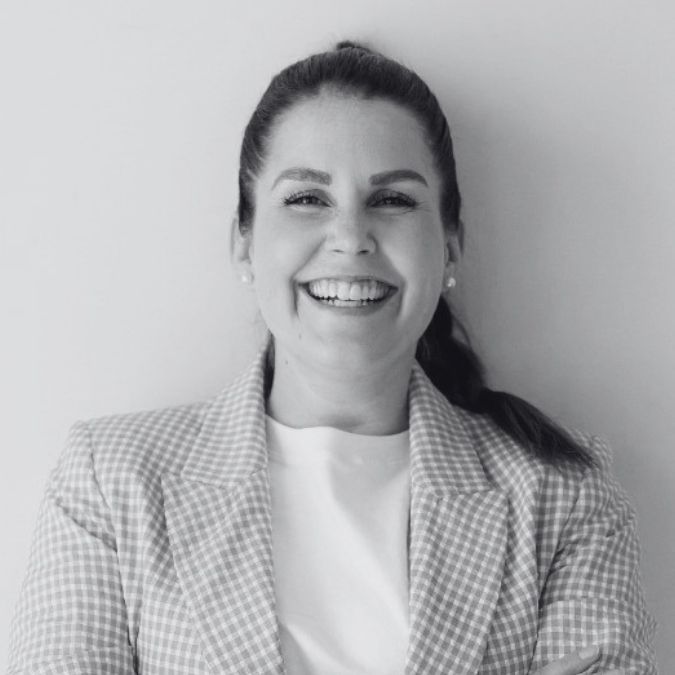
The writer Denise Wall is a marketing communications professional with an extensive background in journalism.
Oma tekstisi MarkkinointiKollektiivin Kipinävuoro-blogiin? Lue lisää ja jaa rohkeasti oma tekstisi.
Lisää
Blogit
-kategoriasta


.png)


.jpg)
.png)


.jpg)



.png)


